- Smart light bulbs are best for lamps, color, and renters. Smart switches are best for ceiling fixtures with several bulbs.
- A smart bulb only works while the wall switch stays on. That is the most common complaint from owners.
- Both save energy the same way: through schedules and automations, not through the bulb itself. Any LED already saves most of the energy.
- Use the calculator to see which option costs less for one fixture.
Smart light bulbs are usually the first smart home device people buy. They screw in like normal bulbs and work from your phone in minutes. But for many rooms, a smart switch is cheaper and easier to live with.
This guide compares smart light bulbs and smart switches on cost, energy use, and daily comfort. It also answers a question many readers search for: which smart bulbs are the healthiest choice for your eyes and sleep.
Smart Light Bulbs or a Smart Switch? Compare the Cost
Each smart bulb also uses a small amount of standby power when it is “off”, usually under half a watt. A smart switch uses a similar amount for the whole fixture.
Smart Light Bulbs vs Smart Switches Side by Side
| Smart bulbs | Smart switch | |
|---|---|---|
| Installation | Screw in, pair with an app | Wiring at the wall; many need a neutral wire |
| Renters | Yes, take them with you | Usually needs landlord approval |
| Color and warm-to-cool white | Yes | No, only on/off and dimming |
| Works if someone flips the wall switch | No, it loses power | Yes, the switch is the control |
| Fixtures with many bulbs | Gets expensive fast | One switch controls them all |
| Lamps that plug into an outlet | Ideal | Not possible |
Our rule: if a wall switch controls the light, use a smart switch. If it is a lamp, or you want color, use smart bulbs. Many homes end up with both.
Do Smart Light Bulbs Save Energy?
Smart bulbs are LEDs, so they use far less energy than old incandescent bulbs: up to 90% less, according to the Department of Energy's lighting guide. But a regular LED gives you the same saving for less money. The extra saving from a smart bulb comes only from turning lights off on a schedule, dimming them, or switching them off when you leave home.
So if you already use LEDs and turn lights off, a smart bulb will not change your bill much. Buy it for convenience and automations, not as a money saver.
What Is the Healthiest Smart Light Bulb?
No bulb is "healthy" on its own. Some features are about comfort, and one is about sleep:
- Tunable white (about 2200K–6500K). Warm light in the evening, cooler light during the day. This is the feature linked to sleep: bright, blue-rich light in the evening can delay sleep (Harvard Health), so dimmer, warmer light at night is the usual advice.
- A "warm evening" schedule. Most apps can shift to warm, dim light after sunset automatically.
- Low flicker (comfort). Cheap bulbs can flicker when dimmed, which some people find tiring. Read reviews that mention dimming.
- High color quality (CRI 90+, comfort). CRI measures how natural colors look under the light. It is a matter of preference, not a health feature.
The setting matters more than the brand. A warm, dim schedule at night is the single most useful "healthy" feature.
Watch: Smart Bulbs vs. Smart Switches
- Install needs: neutral wire, landlord permission, wall access
- Typical prices in October 2026
- Energy use, from Department of Energy lighting data
- Everyday use: what happens when someone flips the wall switch
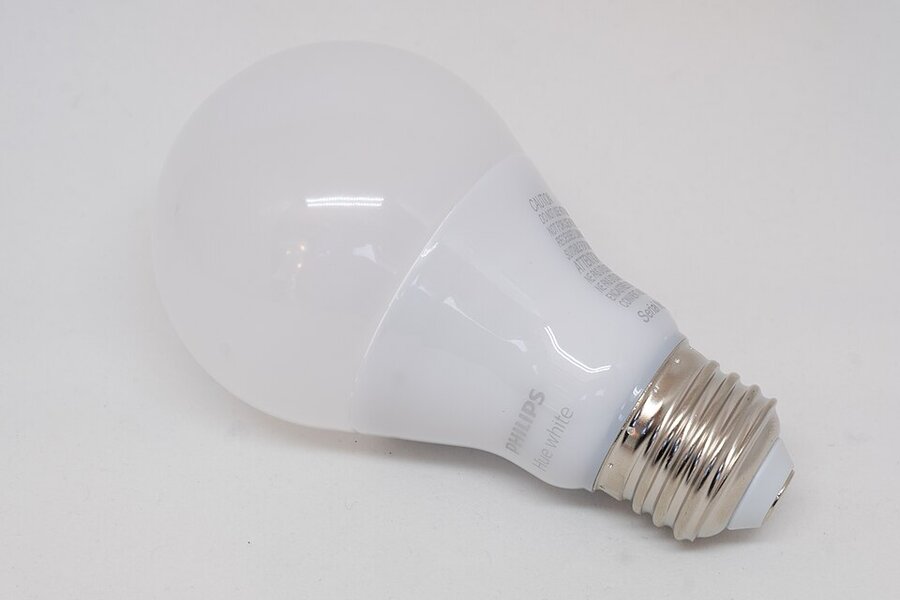
The Philips Hue photo is only an example of a smart bulb. We haven’t tested these products in person. No brand paid to be included.
What Real Owners Say
We looked at what owners report after living with both options. We summarized their experiences in our own words and linked the sources. They are individual experiences, not tests.
On the SmartThings community forum, one owner tried Hue and LIFX bulbs around the house. Sooner or later, someone turned off the wall switch, and the smart bulb became useless until it was switched back on. Another member pointed out that for a five-bulb track light, one smart switch did the job of five smart bulbs.
Source: SmartThings community forumOn the Tom's Guide forum, a homeowner said voice control worked fine for them, but their partner found remembering device names too complicated. Adding battery-powered smart switches in each room fixed it. Another member noted that their bulbs simply come back on in plain white when the wall switch is turned on again.
Source: Tom's Guide forumThe lesson: think about everyone who uses the room, not just you.
When Smart Bulbs or Switches Are Not Worth It
- Rarely used lights. A closet or guest room light gains little from automation.
- Fixtures with many bulbs. Buying five smart bulbs for one fixture costs more than a switch.
- No neutral wire and no landlord approval. Choose smart bulbs plus a battery remote instead.
- You only want to save money. Plain LEDs give you most of the saving.
Checklist Before You Buy
Frequently Asked Questions
Can I use smart light bulbs with a smart switch?
Usually not on the same circuit, because the switch cuts power to the bulbs. Use a smart remote or a "smart bulb mode" switch instead.
Do smart light bulbs use power when they are off?
Yes, a little, because they stay connected. It is usually under half a watt per bulb.
Which is better for renters?
Smart bulbs. They need no wiring and leave with you.
Our Verdict
Choose smart light bulbs for lamps, color, and rentals. Choose a smart switch for ceiling fixtures and rooms where guests use the wall switch. For most homes, the best setup mixes both.
If your only goal is a lower bill, buy plain LEDs first. Then add smart control where a schedule or an automation really changes how long lights stay on.
Keep reading
- Smart Lighting Automation: Motion Sensors and Routines That Save Energy: sensors and routines that save energy.
- LED vs Incandescent Bulbs: Real Energy Savings in 2026: what switching to LED saves.
- Best Solar Lights for Your Yard: What Lasts and What Doesn't: outdoor solar lights that last.