Wondering how to lower electric bill costs when you rent? You can’t replace the windows or the AC, but you still control most of what uses power. Small changes to heating, cooling, and devices add up month after month.
- Heating and cooling are usually the biggest part of an apartment electric bill. Start there.
- Every tip here is renter-friendly: no drilling, nothing permanent, nothing that risks your deposit.
- If your bill is far above your neighbors’, the problem may be the unit itself. Report it to your landlord in writing.
- Tick the changes below to estimate what they could save on your bill.
Use the planner below to see which changes matter most for your bill. Then read what other renters found, including one case where the real problem was a broken AC.
How to Lower Electric Bill Costs: Your Savings Planner
How it works: the heating and cooling part uses U.S. averages from the EIA (air conditioning about 19% of home electricity, space heating about 12%). It only counts what is on your bill. The thermostat saving is $0 up to 10% of that part, the “up to 10% a year” the U.S. Department of Energy gives for this setback. LEDs use at least 75% less energy than old bulbs (DOE), so each 60 W bulb saves about 45 W while on. Standby saving = watts × 24 h × your price. Draft blockers, window film and curtains are not counted: we found no reliable figure for renters, so we don’t invent one. No change ticked means $0.
The Renter-Friendly Changes, With Costs
Here is how to lower electric bill costs without touching the walls, from free habits to small purchases.
| Change | Typical cost | Landlord OK needed? | Why it helps |
|---|---|---|---|
| Thermostat habits | $0 | No | Heating and cooling use the most power |
| LED bulbs | A few dollars each | No | About 75% less power than old bulbs |
| Smart power strip | About $25–$50 | No | Cuts standby power from TVs and consoles |
| Door draft stopper | About $10–$20 | No | Stops cold or hot air under the door |
| Window insulation film | About $15–$30 per kit | Usually no | Removable layer over drafty glass |
| Smart plug on a fan or lamp (for a window AC, use its own timer or an infrared controller) | About $10–$20 | No | Runs it only when you need it |
| Smart thermostat | About $80–$250 | Yes | Schedules and away mode |
Smart Home Devices That Need No Installation
- Smart plugs for lamps and fans. For a window AC, use its built-in timer or app, or an infrared smart controller, and follow the manual.
- Smart AC controllers that send infrared signals to your existing unit.
- Smart bulbs on a schedule, for lamps you forget to switch off.
- Plug-in energy monitors to find which device uses the most.
All of these plug in or screw in, and they move with you when you leave.
Watch: Energy Saving Tips for Renters
What Real Renters Say
These are individual experiences, summarized in our own words.
A renter in Kansas City shared on TikTok, as reported by the Daily Dot, that her apartment wouldn’t cool below 87°F while her bill reached about $400 a month. She bought a portable AC and turned off the main unit, and both the heat and the bill improved. A viewer who said he was an AC technician replied that the apartment’s system was clearly faulty.
Source: The Daily DotIn a discussion for renters on Offbeat Home, one commenter said she and her partner rarely use the apartment’s main heating. At night they partly close the bedroom door and use a small heater, and their highest bill was about $100 in December. Another commenter said an electric blanket saved her a lot.
Source: Offbeat HomeThe first story is a warning: if your bill is very high and your unit can’t keep up, the equipment may be broken. That’s your landlord’s job to fix.
When These Tips Won’t Help Much
Knowing how to lower electric bill costs only helps when the bill is yours and the equipment works. These are the exceptions:
- Utilities are included in your rent. You won’t see the savings yourself.
- The building controls the heat. Focus on drafts and devices instead.
- Broken equipment. No habit fixes an AC that runs nonstop. Report it in writing.
- Only changes that need no drilling and don’t risk your deposit
- Typical prices in October 2026
- Where the energy goes, using EIA data
- Real renters’ experiences, with links
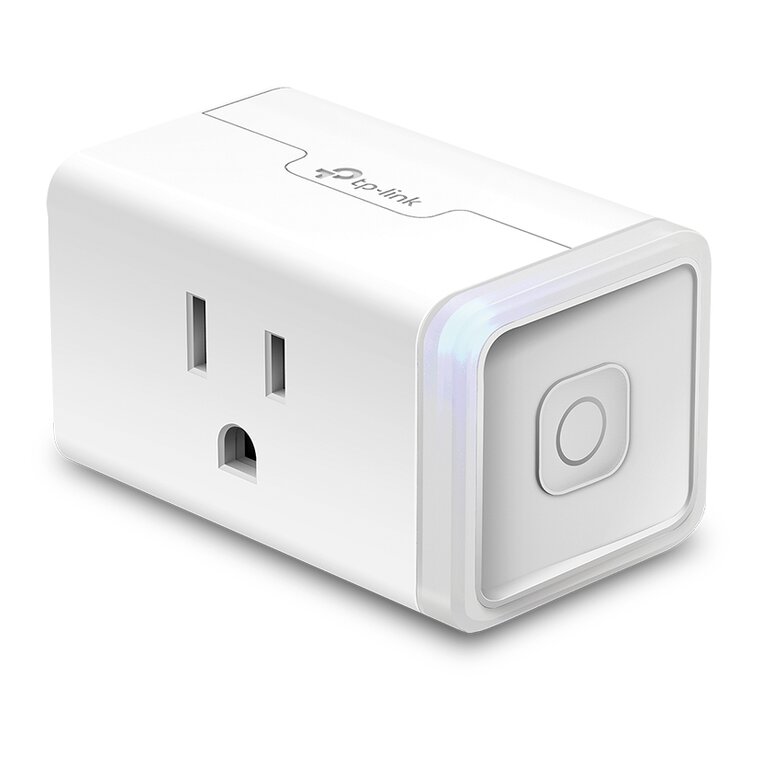
The Kasa smart plug is shown only as an example. We haven’t tested these products in person. No brand paid to be included.
Frequently Asked Questions
What uses the most electricity in an apartment?
Usually heating and cooling, then the water heater (if electric), then appliances and electronics.
Is a space heater cheaper than central heat?
Only if you heat one room and keep the rest of the apartment cooler. Heating several rooms with space heaters often costs more. For safety, plug a space heater straight into a wall outlet. The U.S. Fire Administration warns against extension cords and power strips, and we’d apply the same rule to smart plugs.
How do I know if my bill is too high?
Compare your kWh (not dollars) with the same month last year and with neighbors in similar units. A big jump with no change in habits points to a problem.
Our Verdict
If you want to know how to lower electric bill costs as a renter, start with free thermostat habits, then add LEDs, a smart power strip, and draft blockers. Together they cover most of what a renter can control.
And if your bill is far out of line, don’t just cut back. Ask your landlord to check the heating and cooling system.
Keep reading
- Smart Thermostat for Apartment: What Renters Can Install: what renters can install.
- Apartment Air Conditioner: How to Size and Choose One as a Renter: size and choose an apartment AC.
- What Is Community Solar? How It Works and What You Really Save: solar savings without a roof.