- A Level 2 home EV charger (240 V) adds roughly 25–45 miles of range per hour, versus 3–5 on a regular outlet.
- Good chargers cost about $300–$700; installation often adds a few hundred to $1,500, more if you need a panel upgrade.
- Charging at home at about 18¢/kWh costs roughly a third to half of driving on gas at $4.27 a gallon (EIA, October 2026).
- The federal charger credit (30C) ended for equipment placed in service after June 30, 2026. Check utility rebates.
The best home EV charger for most drivers is a Level 2 unit on a 240 V circuit. It charges far faster than a standard outlet and makes overnight top-ups easy. This guide compares five popular chargers, explains what installation really involves, and shows how much charging at home saves compared with gas or public fast chargers.
Home Charging vs Gas Calculator
An estimate with typical efficiencies. Real use depends on your car, speed, weather and electricity plan.
EPA figures already include charging losses (EPA), so nothing is added to them; for a number from the car’s display we add an estimated 10%. It ignores maintenance, which is usually lower for EVs, and public charging, which usually costs more than home.
The Best Home EV Chargers at a Glance
| Charger | Max power | Install | Typical price | Best for |
|---|---|---|---|---|
| ChargePoint Home Flex | 16–50 A adjustable (up to ~12 kW) | Plug-in (40 A) or hardwired | About $500–$700 | Most homes; best app |
| Tesla Universal Wall Connector | 48 A (11.5 kW) | Hardwired only | About $550–$600 | Tesla and mixed-EV homes |
| Emporia EV Charger | 48 A hardwired / 40 A plug-in | Either | Often about $300–$450 | Smart features on a budget; pairs with Emporia’s monitor |
| Wallbox Pulsar Plus | 40 or 48 A | Either | About $500–$800 | Small garages; two EVs (power sharing) |
| Grizzl-E Classic | 40 A (9.6 kW) | Plug-in | About $300–$425 | Rugged and simple; no app |
Prices are typical 2026 street prices and change with sales. Connectors: most non-Tesla EVs use J1772, while many newer models use NACS (Tesla’s plug); several chargers here come in both versions. Avoid buying used chargers from brands that have left the U.S. market, since their apps may no longer work.
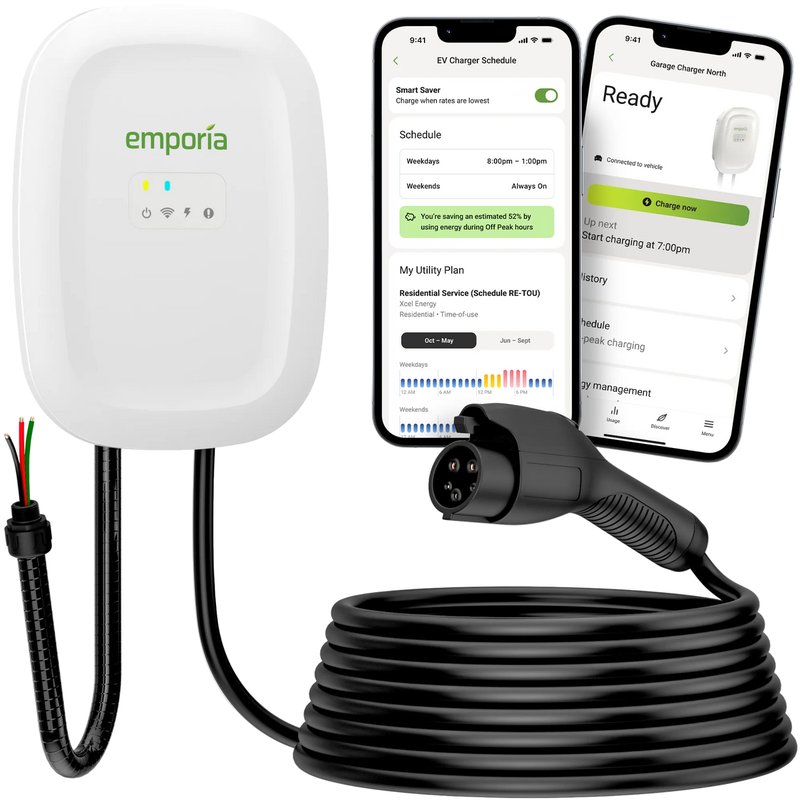
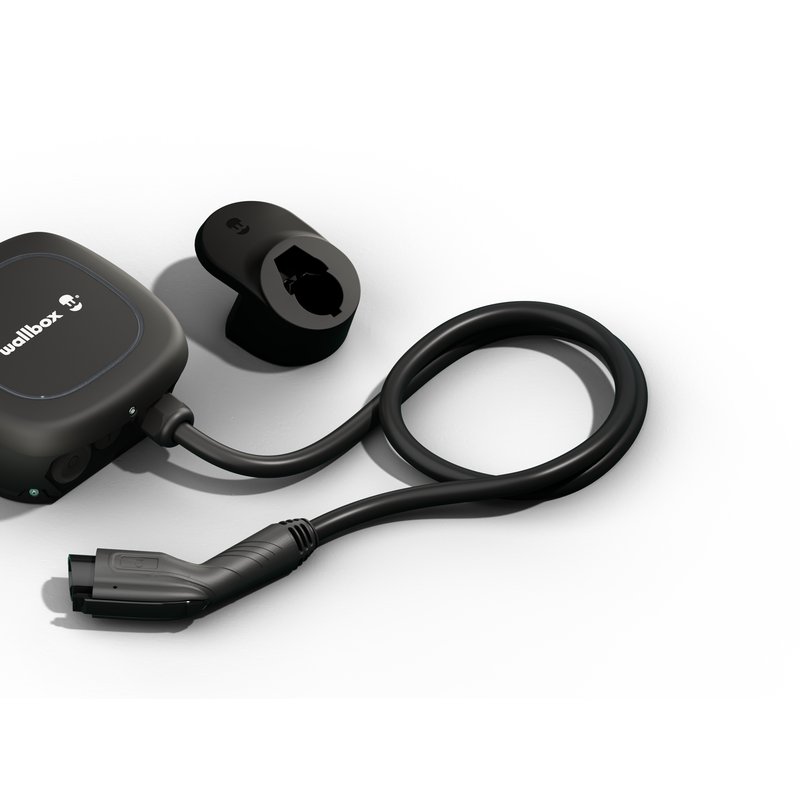
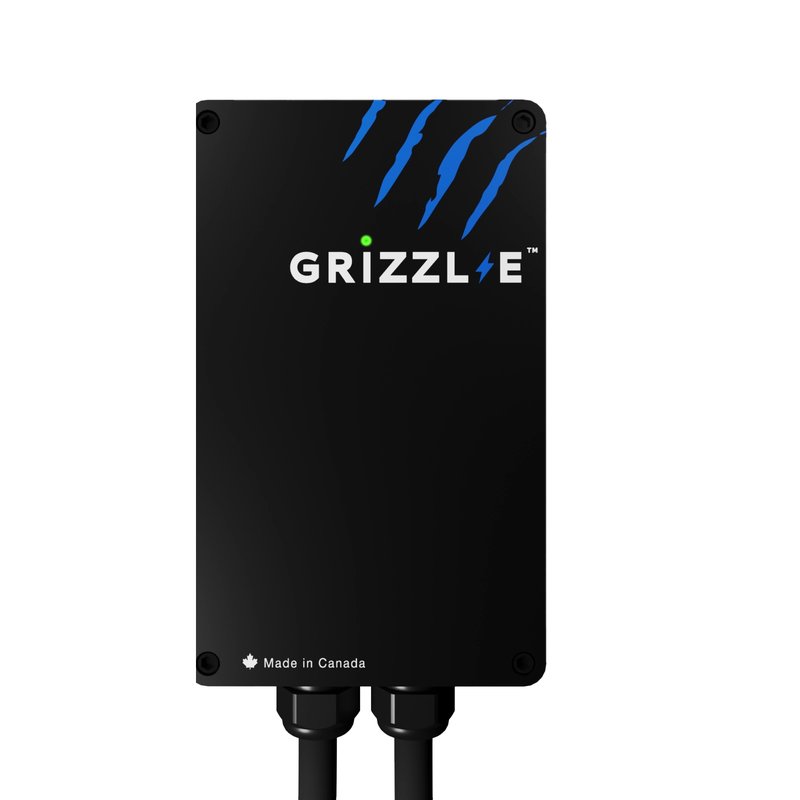
Product photos from each maker. We have not tested these chargers in person.
Level 1 vs Level 2
Level 1 uses a regular 120 V outlet and adds about 3–5 miles per hour, enough for short daily drives or plug-in hybrids. A Level 2 charger uses 240 V and adds roughly 25–45 miles per hour depending on the charger and car, enough to refill most EVs overnight.
How to Choose and Install a Home EV Charger
- Match the connector (J1772 or NACS) to your car, or plan on an adapter.
- Check your panel. A 48 A charger needs a 60 A circuit; a 40 A charger, a 50 A circuit. An electrician does a load calculation.
- Before paying for a panel upgrade, ask about lower-amp settings or load-management chargers that share capacity with the rest of the house.
- Get a permit and two quotes. Cost depends mostly on the distance from the panel to the parking spot.
- Use smart scheduling to charge off-peak if your utility has time-of-use or EV rates.
- Measure cable length and check indoor or outdoor rating.
Incentives: the federal 30C charger credit isn’t allowed for property placed in service after June 30, 2026, according to the IRS. Many utilities still offer rebates or special EV rates.
What Real Owners Say
These are individual experiences, summarized in our own words.
A Tom’s Guide writer who charged EVs at home for a year said the impact on the monthly electric bill was minimal. Their utility also offered up to $1,500 toward installing a Level 2 charger, which you had to apply for.
Source: Tom’s GuideAn EV driver received a $10,000 estimate that included a panel upgrade. Other owners told him a 100-amp panel can often handle a charger with load management or a lower amp setting, and to keep calling electricians until he found one familiar with them.
Source: The Cool Down (owner report)For a wider view, J.D. Power’s 2026 home charging study put average monthly home charging spending at about $63, up $5 from the year before, as reported by GCN.
- Amps, connectors and install options from the makers’ spec sheets
- Typical 2026 street prices
- Charging costs from EIA electricity and gasoline prices
- The end of the 30C credit from IRS guidance
We haven’t tested these products in person. No brand paid to be included.
When a Level 2 Charger Isn’t Worth It
- You drive under about 30–40 miles a day and can plug into a regular outlet overnight.
- You rent and can’t install one: ask about workplace or building charging instead.
- The install needs a big panel upgrade and a load-managed or lower-amp charger would do.
- You have a plug-in hybrid with a small battery that charges fully on Level 1.
Frequently Asked Questions
What is the best home EV charger?
For most homes, the ChargePoint Home Flex. Tesla owners or mixed households should consider the Tesla Universal Wall Connector; budget buyers, the Emporia or Grizzl-E.
How much does it cost to install a Level 2 charger?
Often a few hundred to about $1,500 for installation, plus the charger. A panel upgrade can add $1,500–$4,000 or more.
How much will home charging add to my bill?
At 12,000 miles a year, 30 kWh per 100 miles and 18¢/kWh, about $60–$65 a month. Off-peak rates can cut that a lot.
Is there still a federal tax credit for EV chargers?
No, not for chargers placed in service after June 30, 2026. Check utility and state rebates.
Do I need a hardwired charger?
No. Plug-in chargers on a NEMA 14-50 outlet work well up to 40 A; hardwiring allows 48–50 A and is often required outdoors.
Our Verdict
The ChargePoint Home Flex is the best home EV charger for most people. Tesla drivers should get the Wall Connector, and budget buyers will be happy with an Emporia or Grizzl-E. Spend your effort on the installation: get a load calculation, ask about load management before a panel upgrade, and charge off-peak. That’s where the savings are.
Keep reading
- How to Read Your Electric Bill, Line by Line (Plus Time-of-Use Rates): every line of your bill and time-of-use rates.
- How Many Solar Panels Do I Need? Formula, Calculator and Examples: size a solar system for your home.
- Best Home Battery Systems in 2026: Powerwall 3 vs Enphase vs FranklinWH: whole-home battery backup compared.
Sources We Checked
- EIA, Gasoline and Diesel Fuel Update (weekly gas prices)
- EIA Electric Power Monthly, Table 5.6.A (average electricity prices by state)
- IRS, Alternative Fuel Vehicle Refueling Property Credit (30C)
- J.D. Power 2026 U.S. EV Experience Home Charging Study (survey of owners)