Smart blinds are motorized shades you control from your phone, a voice assistant, or a schedule. Most people buy them for comfort and convenience. But set up the right way, smart blinds can also cut heating and cooling waste through your windows.
- Smart blinds save energy only when they follow the sun automatically: closed on hot afternoons, closed on winter nights.
- West- and south-facing windows benefit the most.
- The fabric matters as much as the motor. Cellular (honeycomb) shades insulate best.
- Use the checker below to see what each of your windows needs.
The key word is “automatically”. A shade you forget to close saves nothing. A shade that closes itself at 2 p.m. every summer day works even when you are at work.
What Do Smart Blinds Do for Each Window?
What the Official Data Says
The Department of Energy’s guide to energy-efficient window attachments gives the clearest numbers. Cellular shades can reduce heat loss through windows by 40% or more in winter. Medium-colored draperies with a white plastic backing can cut heat gain in summer by about a third.
That’s the effect of the covering itself. Smart blinds simply make sure the covering is in the right position at the right time.
Smart Blinds Options Compared
| Option | Rough cost per window | Insulation | Best for |
|---|---|---|---|
| Motorized cellular shades | High | Best | Cold winters and hot west rooms |
| Motorized roller shades | Medium to high | Medium (better with blackout fabric) | Glare and summer heat |
| Retrofit motor on existing blinds or curtains | Low | Same as your current covering | Renters and tight budgets |
Prices vary a lot by size and brand, so ask for a quote per window. Battery or solar-charged motors avoid wiring.
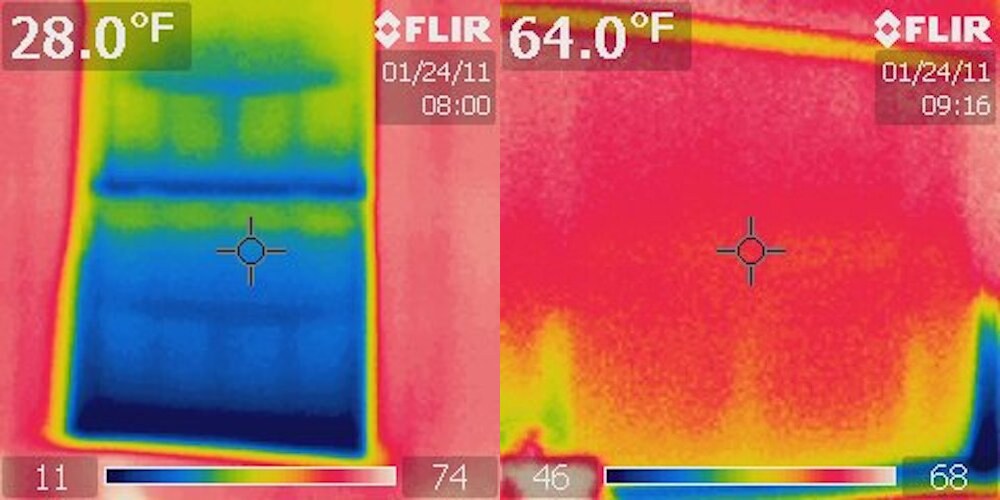
Watch: A Cellular Shade Under a Thermal Camera
A homeowner points a thermal camera at a window before and after fitting cellular shades. It shows why the fabric matters as much as the motor.
- Insulation of the fabric, using Department of Energy data
- Rough cost per window and whether a renter can install it
- Power: battery, solar or wired motors
- Which routines the major smart home systems support
We haven’t tested these products in person. No brand paid to be included.
What Real Owners Say
These are individual experiences, summarized in our own words.
A homeowner on Reddit, summarized by The Cool Down, shared an 18-month review of nine motorized cellular shades. Their west-facing living room stopped feeling drafty at night once the shades closed after sunset. A south-facing bedroom that used to run several degrees warmer now stays within about one degree of the rest of the house.
Source: The Cool Down, summarizing a Reddit reviewOn the SmartThings forum, an owner shared this routine: the shades close when a light sensor reads strong sun and the forecast is above 60°F, and open again when the sun weakens. Another member uses indoor temperature to close west-facing shades in summer only, so they stay open for free heat in winter.
Source: SmartThings community forumWhen Smart Blinds Are Not Worth It
- North-facing windows in a mild climate gain or lose little heat from sun.
- You will control them by hand anyway. Then manual cellular shades give the same result for less.
- Thin fabric. A motor can’t fix a covering that doesn’t insulate.
Three Smart Blinds Routines to Set Up
- Summer afternoon: close west windows from 1 p.m. to sunset, May to September.
- Winter night: close all shades at sunset, November to March.
- Winter sun: open south shades from 10 a.m. to 3 p.m. on sunny days.
Frequently Asked Questions
Do smart blinds really lower energy bills?
They can, mainly on sunny west and south windows, when they run on a schedule or sensor. The saving is modest; comfort is the bigger change.
Can renters use smart blinds?
Yes. Retrofit motors attach to existing blinds or curtain rods and come off when you move.
Battery or wired?
Battery and solar-charged motors are easiest. Wired motors suit new builds and big windows.
Our Verdict
Smart blinds make the most sense on west- and south-facing windows, with cellular fabric and an automatic schedule. That’s where they cut heat gain in summer and heat loss on winter nights.
For other windows, or on a tight budget, a good manual cellular shade or a cheap retrofit motor gives most of the benefit.
Keep reading
- Weatherstripping for Doors and Window Insulation Kits: What Works (2026): stop drafts at doors and windows.
- Apartment Air Conditioner: How to Size and Choose One as a Renter: size and choose an apartment AC.
- How to Lower Your Electric Bill in an Apartment (Renter-Friendly): cut your bill as a renter.