- An LED bulb uses about 75–85% less electricity than an incandescent bulb that gives the same light.
- A 60-watt incandescent can be replaced by an LED of about 8–10 watts.
- The savings are biggest on lights that stay on for hours, like outdoor or kitchen lights.
- If most of your home is already LED, there’s little left to save from lighting.
The LED vs incandescent question sounds settled, and in many ways it is. LEDs use far less power and last much longer. But many people switch every bulb and then see almost no change on their bill. Why?
Because lighting is only a small part of most bills, and not every bulb is on for long. The calculator below shows what you would really save in your home, bulb by bulb.
LED vs Incandescent Savings Calculator
LED vs Incandescent: The Numbers Side by Side
| Incandescent | LED | |
|---|---|---|
| Power for "60 W" of light | 60 watts | About 8–10 watts |
| Typical lifespan | About 1,000 hours | About 15,000–25,000 hours |
| Heat given off | Most of the energy becomes heat | Very little heat |
| Price per bulb | Lower, but rarely sold now | A few dollars |
| Dimming | Works with any dimmer | Needs "dimmable" LEDs and sometimes a newer dimmer |
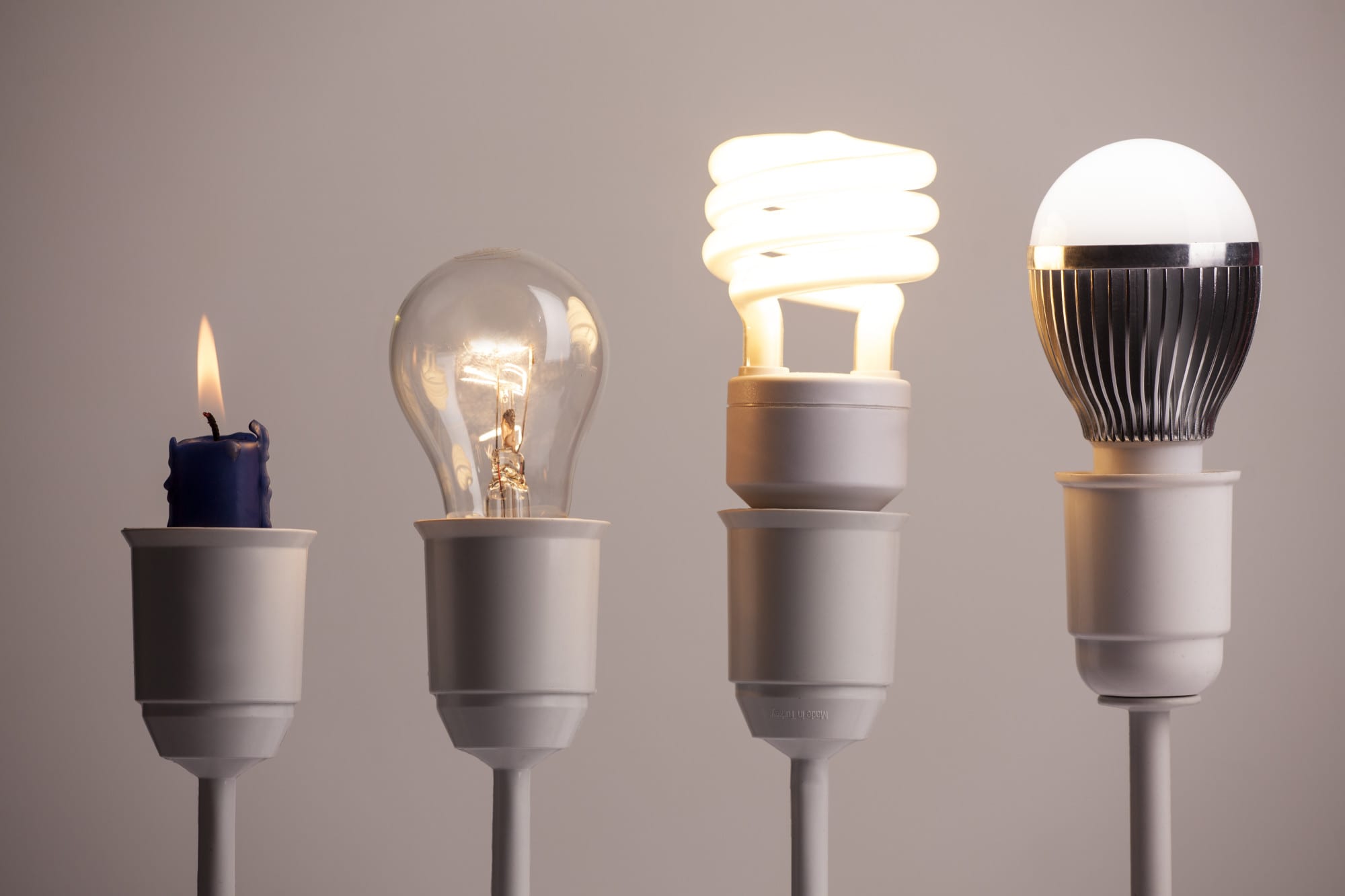
The Department of Energy's lighting guide says LEDs use up to 90% less energy and last up to 25 times longer than traditional incandescent bulbs. Since 2023, U.S. efficiency rules have pushed most standard incandescent bulbs off store shelves, so many readers are really replacing old bulbs still in the house.
Where Switching Saves the Most
- Outdoor lights on all night or on dusk-to-dawn sensors.
- Kitchen and living room lights used for hours every day.
- Fixtures with many bulbs, like chandeliers or bathroom vanity bars.
- Recessed ceiling lights, where old floodlights often use 65 watts each.
A closet light used two minutes a day will take decades to pay back. Leave it for last.
What Real People Noticed on Their Bills
Here's what homeowners and an electrician report, summarized in our own words. These are individual experiences, not tests.
On an electricians' forum, a contractor described a client whose bill had jumped by $400–$500 a month. The cause: 14 outdoor fixtures with three 60-watt bulbs each, set to switch on automatically from dusk to dawn. After switching them all to LED, the bill dropped right away.
Source: Mike Holt's electrical forumOn a tractor owners' forum, one member wrote that replacing the incandescent and compact fluorescent bulbs in an old home with LEDs cut about $25 from a $100 monthly bill.
Source: Orange Tractor Talks forumIn another forum discussion, several members said they switched their most-used lights to LED but saw no clear change on the bill. One explained that lighting was a small part of total use, and that a newer water heater and refrigerator made a far bigger difference.
Source: TractorByNet forumAll three are right. Switching saves a lot when many bulbs burn for many hours. It saves little when lighting was already a small part of the bill.
When Switching to LED Won't Save You Much
- Your home is already mostly LED or CFL. The remaining gain is small.
- The light is rarely used. Replace it when the old bulb burns out instead.
- Your bill is driven by heating, cooling or a water heater. Lighting won't move it much.
How to Choose the Right LED Bulb
Watch: LED vs. Incandescent Bulbs
Video: Light Bulbs | LED vs. Incandescent on YouTube.
- Wattage and lifespan figures from the Department of Energy and ENERGY STAR
- Yearly costs calculated at 17¢ per kWh, close to the U.S. average (EIA)
- Bill experiences from real homeowners, with links
This guide compares bulb types, not brands, so no product was tested. No brand paid to be included.
Frequently Asked Questions
How much money does an LED bulb save?
Replacing one 60-watt bulb used 3 hours a day saves around $9 a year at 17 cents per kWh. Use the calculator for your own numbers.
Are incandescent bulbs banned in the U.S.?
Efficiency rules that took full effect in 2023 removed most standard incandescent bulbs from stores. Some special bulbs, like appliance bulbs, are still sold.
Do LED bulbs make rooms cooler?
Yes, a little. Incandescent bulbs turn most of their energy into heat, so LEDs can slightly reduce air conditioning in summer.
Why didn't my bill drop after switching?
Lighting is usually a small share of the bill. Heating, cooling and water heating often matter much more.
Our Verdict
In the LED vs incandescent debate, LED wins clearly: it uses a fraction of the power and lasts many times longer. Start with the lights that stay on the longest, especially outdoor ones.
Just don't expect a miracle if your home is already mostly LED. At that point, your heating, cooling and appliances are where the real savings hide.
Keep reading
- Smart Light Bulbs vs Smart Switches: Which Should You Buy?: smart bulbs or smart switches.
- Energy Saving Myths That Cost You Money, Plus Winter and Summer Tips That Work: tips that really work and myths to drop.
- Best Solar Lights for Your Yard: What Lasts and What Doesn't: outdoor solar lights that last.