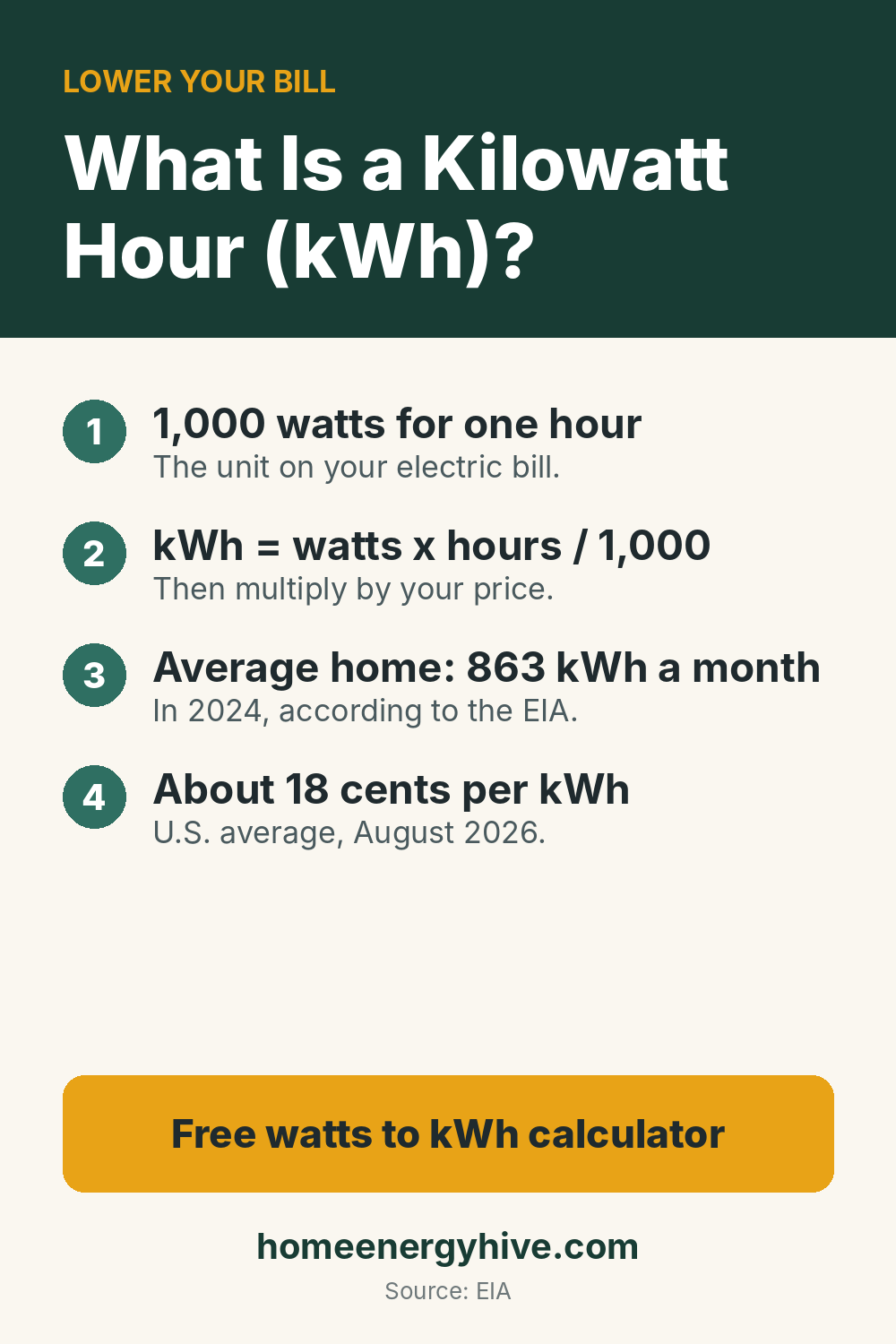
- A kilowatt hour (kWh) is the energy of 1,000 watts used for one hour. It is the unit on your electric bill.
- Watts measure power at a moment; kWh measure energy over time. kWh = watts × hours ÷ 1,000.
- The average U.S. home bought 863 kWh a month in 2024, and a kWh cost 18.16¢ on average in August 2026 (EIA).
- Use the calculator below to turn any device’s watts into kWh and dollars.
What is a kilowatt hour? It is the unit your utility uses to charge you, yet most people never learn what it means. Once you understand it, you can work out what any device costs to run, compare appliances and spot what is driving your bill. This guide explains it in plain words with everyday examples, using the U.S. Energy Information Administration’s definitions.
What Is a Kilowatt Hour? Watts vs Kilowatt Hours
The EIA explains that electricity is measured in watts, a unit of power. One kilowatt (kW) is 1,000 watts. Watts measure power at a specific moment, while watt hours measure how much electricity is used over a period of time.
In other words, a kilowatt hour is one kilowatt used for one hour. The EIA gives a simple example: a 40-watt light bulb left on for five hours uses 200 watt hours, or 0.2 kWh.
Think of it like a car. Watts are your speed at one moment; kWh are the miles you have driven. Your bill counts the miles, not the speed.
The Formula
kWh = watts × hours ÷ 1,000
- A 1,500-watt space heater for 2 hours: 1,500 × 2 ÷ 1,000 = 3 kWh.
- A 10-watt LED bulb for 100 hours: 10 × 100 ÷ 1,000 = 1 kWh.
- A 60-watt TV for 5 hours a day for 30 days: 60 × 150 ÷ 1,000 = 9 kWh.
After that, multiply the kWh by your price per kWh to get the cost.
Example values only. Devices that cycle on and off, like fridges and heaters with thermostats, use less than their full rating over a day.
What Does One Kilowatt Hour Run?
Based on the formula and figures from our other guides, one kWh is roughly:
| Device | What 1 kWh gives you |
|---|---|
| 10-watt LED bulb | About 100 hours of light |
| 1,500-watt space heater on high | About 40 minutes |
| Electric car at 25 kWh per 100 miles | About 4 miles |
| Refrigerator using 600 kWh a year | About 15 hours |
| Conventional electric dryer (about 2.3 kWh per load) | A bit less than half a load |
Our calculations. See the guides on space heaters, EV charging, refrigerators and dryers for the sources.
What Does a Kilowatt Hour Cost?
The U.S. residential average was 18.16¢ per kWh in August 2026, according to the EIA’s Electric Power Monthly. However, prices vary a lot by state. For example, in 2024, the EIA’s average bill table shows Hawaii at 42.86¢ and Louisiana at 11.73¢ per kWh.
Your real price includes delivery charges, taxes and fees. To find it, divide the total dollars on your bill by the kWh used. Our guide on how to read your electric bill shows where each number is.
How Many kWh Does a Home Use?
The same EIA table shows that the average U.S. residential customer bought 863 kWh a month in 2024. Of course, that figure varies with climate, home size, and whether you heat and cook with electricity. Compare your own use with your state in our guide to the average electric bill.
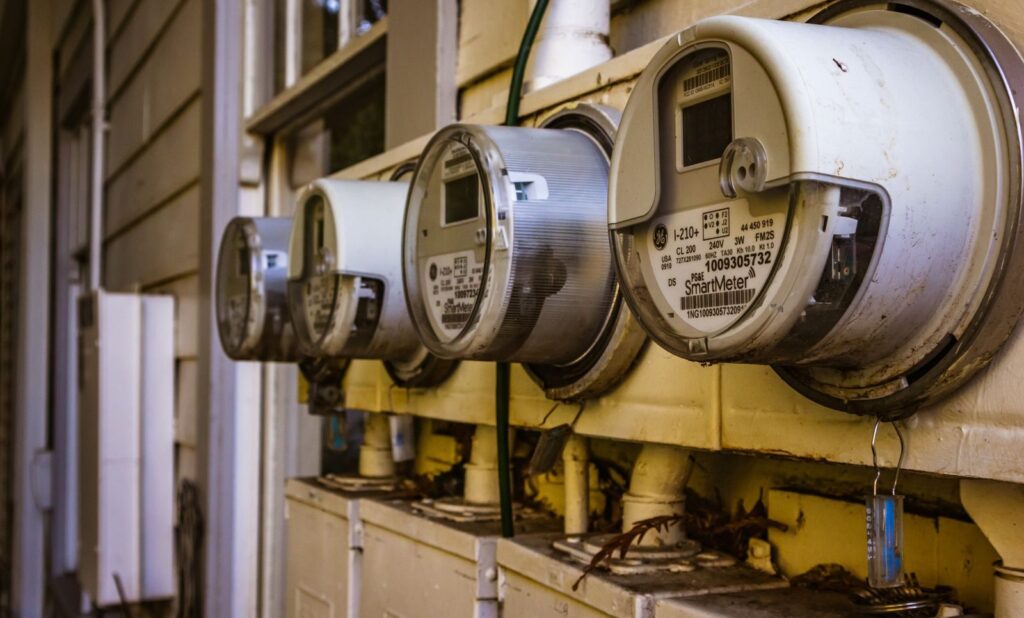
Your meter counts every kWh. The EIA notes that many utilities now use smart meters, which send usage data in real time. If your utility shares that data in your online account, it is the easiest way to see what a single appliance adds.
kW vs kWh: A Common Mix-Up
A kW rating tells you how much power something needs right now, like a 7 kW home EV charger. A kWh figure tells you how much energy is used or stored, like a 13.5 kWh home battery. A 7 kW charger running for 2 hours delivers 14 kWh. Mixing the two up is one of the most common mistakes in solar, battery and EV quotes, so check which one a number is.
- Definitions and the light bulb example from the EIA’s Energy Explained pages
- Average use and state prices from the EIA’s 2024 average monthly bill table
- Current average price from the EIA’s Electric Power Monthly
- Examples and calculator are our own math
No company pays to appear here, and we have not tested products in person.
Frequently Asked Questions
What is a kilowatt hour in simple terms?
It is the energy used by something that draws 1,000 watts for one hour, or 100 watts for 10 hours. Your utility bills you per kWh.
How do I convert watts to kWh?
Multiply the watts by the hours used and divide by 1,000. For example, 100 watts for 10 hours is 1 kWh.
How much is 1 kWh of electricity?
The U.S. residential average was 18.16 cents per kWh in August 2026 (EIA). Your own price is on your bill: total dollars divided by kWh used.
How many kWh does a house use per month?
The average U.S. residential customer bought 863 kWh a month in 2024, according to the EIA. Your use depends on climate, home size and electric heating or cooling.
Our Verdict
What is a kilowatt hour? One kilowatt of power used for one hour: the unit your bill counts. Multiply any device’s watts by its hours of use and divide by 1,000 to get kWh, then multiply by your price to get dollars. With that one formula, and the calculator above, you can see exactly what each appliance in your home costs to run.
Keep reading
- How to Read Your Electric Bill: find your real price per kWh
- Average Electric Bill by State: compare your kWh with your state
- Why Is My Electric Bill So High?: find what uses the most
Save this guide on Pinterest