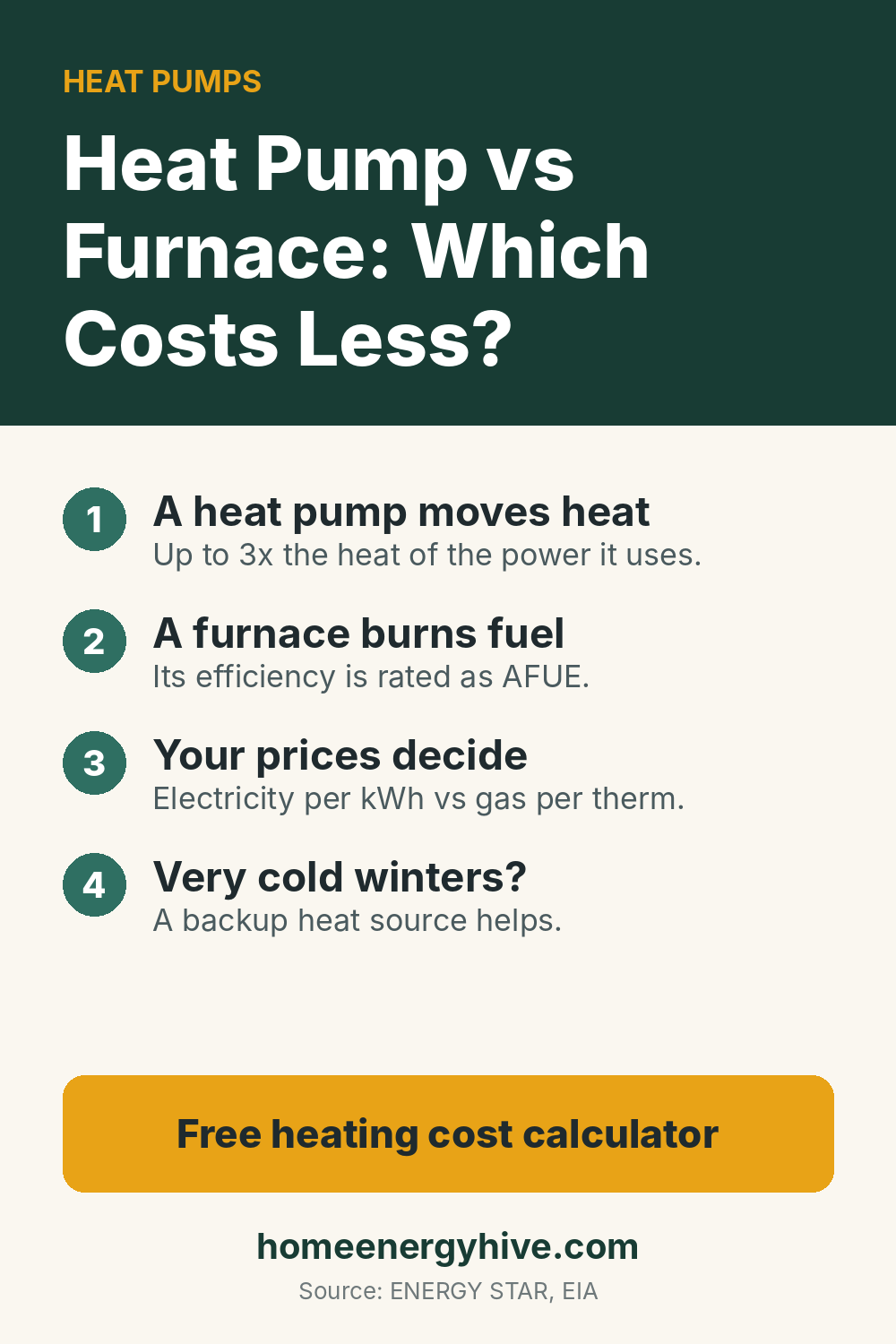
- A heat pump moves heat instead of burning fuel. ENERGY STAR says it can deliver up to three times more heat energy than the electricity it uses.
- A gas furnace burns fuel. Its efficiency is rated as AFUE: the share of the fuel’s energy that ends up as heat in your home.
- Which is cheaper depends on your prices: electricity per kWh against gas per therm. The calculator below compares the cost of the same amount of heat.
- ENERGY STAR certified cold climate heat pumps are tested down to 5°F; below that, a backup heat source helps.
Heat pump vs furnace is one of the biggest decisions in a home, because heating is the largest part of most energy bills. ENERGY STAR estimates a typical household spends around $1,900 a year on energy, and almost half goes to heating and cooling. This guide explains how each system works, then lets you compare the cost of heat with your own prices, which matters more than any national average.
How a Heat Pump and a Furnace Make Heat
A furnace burns natural gas, propane or oil, or uses electric coils, and blows the warm air through ducts. Part of the fuel’s energy goes up the vent, so a gas furnace delivers less heat than the fuel contains. Its AFUE rating tells you how much: a 95% AFUE furnace turns 95% of the fuel’s energy into heat for the home.
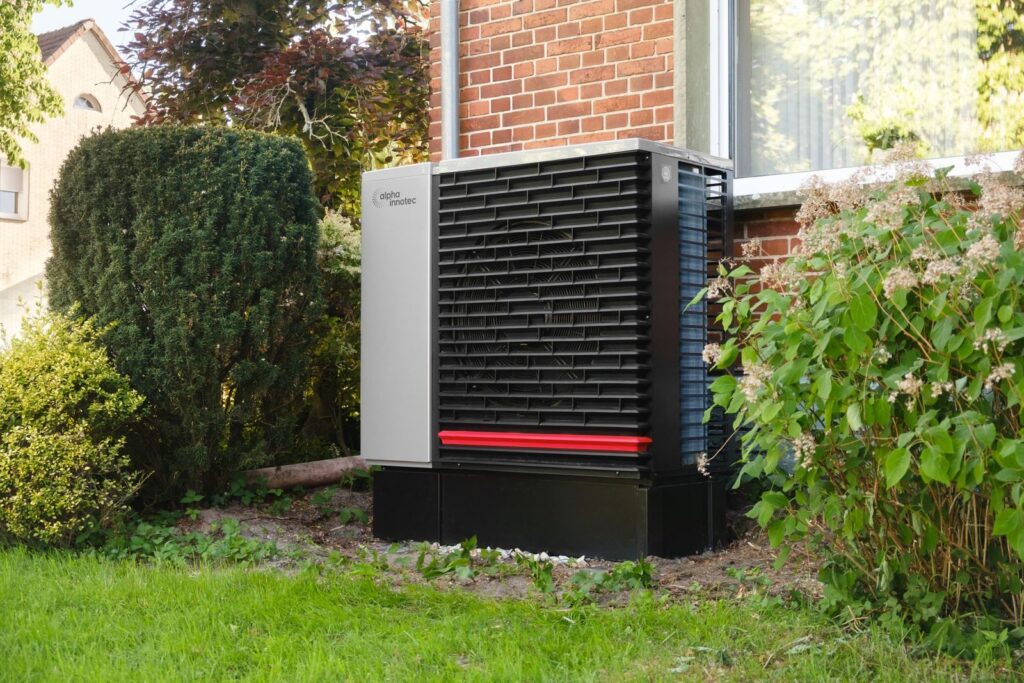
A heat pump works like an air conditioner in reverse. In winter it pulls heat from the outdoor air and moves it inside. Because it moves heat rather than making it from fuel, ENERGY STAR says an air source heat pump can deliver up to three times more heat energy than the electrical energy it consumes. In summer, the same unit cools the house.
By contrast, plain electric resistance heat, such as baseboards or a space heater, turns each kWh into exactly one kWh of heat. Missouri’s energy office calls it the most expensive form of heating. That is why a heat pump and a resistance heater can both be “electric” yet cost very different amounts to run.
Heat Pump vs Furnace: Side by Side
| Air source heat pump | Gas furnace | |
|---|---|---|
| How it heats | Moves outdoor heat inside | Burns gas |
| Efficiency | Up to about 3 units of heat per unit of electricity (ENERGY STAR); lower in very cold weather | Rated by AFUE (on the label); always below 100% |
| Cooling | Yes, same unit | No; needs a separate air conditioner |
| Fuel | Electricity only | Gas line and venting |
| Very cold days | Cold climate models tested to 5°F; backup heat below that | Full output at any temperature |
Compare the Cost of Heat With Your Own Prices
To compare fairly, look at the cost of the same amount of heat delivered to your rooms. We use one million Btu. The EIA’s conversion factors give 3,412 Btu per kWh and 100,000 Btu per therm of gas. Your gas bill shows the price per therm; if it is in cubic feet, the EIA’s figure of 1,036 Btu per cubic foot means about 10.4 therms per thousand cubic feet.
Example values only. A national example: residential gas averaged $16.16 per thousand cubic feet in March 2026 (EIA), about $1.56 per therm, and electricity 18.16¢ per kWh in August 2026 (EIA). Gas prices per unit swing a lot by month and state, so use your own bills.
Heat pump vs furnace: how to read the result
The calculator also shows the break-even efficiency: the heat pump COP at which both systems cost the same. If a heat pump in your climate can beat that number over the winter, it will cost less to run. If not, the furnace wins on running cost. Either way, the heat pump also replaces your air conditioner, which matters if your AC is old.
Heat Pumps in Cold Climates
ENERGY STAR says cold climate heat pump technology has improved significantly in recent years, and its certification for cold climate models requires third-party verified performance at 5°F. These units keep working below 5°F, but ENERGY STAR advises pairing them with a backup heat source to heat the home most efficiently when it is even colder. A good contractor sizes the system and plans how it works with that backup.
That is the idea behind a hybrid (dual fuel) setup: a heat pump handles most of the winter and the furnace takes over on the coldest days. If you already have a working furnace, adding a heat pump in place of an old air conditioner can be a practical middle path.
Upgrading a Furnace Instead
If gas is cheap where you live, a better furnace may make more sense. ENERGY STAR certified gas furnaces in the northern half of the U.S. are up to 18% more efficient than baseline models and can save about $160 a year. In the South, where homes need less heat, certified models are up to 16% more efficient and save about $60 a year. ENERGY STAR also stresses sealing ducts and insulating, because a new system cannot fix a leaky house.
For what installation costs, see our guide to heat pump installation cost. For the downsides, read the disadvantages of a heat pump before you decide.
- Heat pump efficiency and cold climate testing from ENERGY STAR’s air source heat pump page
- Furnace savings from ENERGY STAR’s furnace page
- Btu conversions from the EIA
- Example prices from the EIA’s natural gas and electricity tables
- The calculator is our own: cost of one million Btu of delivered heat
No company pays to appear here, and we have not tested products in person.
Frequently Asked Questions
Is a heat pump cheaper to run than a gas furnace?
It depends on your electricity and gas prices and on how efficient the heat pump is in your climate. Enter your own prices in the calculator above to compare the cost of the same amount of heat.
Do heat pumps work in cold weather?
Yes, modern cold climate models do. ENERGY STAR tests them down to 5°F. They keep running below that, but a backup heat source helps on the coldest days.
Can I keep my furnace and add a heat pump?
Yes. A hybrid or dual fuel system uses the heat pump most of the time and the furnace on very cold days. Ask a contractor to size it and set the switch-over.
What is COP?
The coefficient of performance: units of heat delivered per unit of electricity used. A COP of 3 means three kWh of heat for every kWh of electricity. Plain electric heat has a COP of 1.
Our Verdict
In the heat pump vs furnace decision, efficiency favors the heat pump, which moves heat instead of burning fuel and also cools in summer. Running cost, though, depends on your local electricity and gas prices and your climate. Use the calculator with your own bills: if a heat pump can beat the break-even COP over the winter, it is the cheaper way to heat. In very cold areas, a heat pump with backup heat often gives the best of both.
Keep reading
- Disadvantages of a Heat Pump: the downsides before you buy
- Heat Pump Installation Cost: what installation costs
- How Do I Know if I Have a Heat Pump?: check your current system
Save this guide on Pinterest