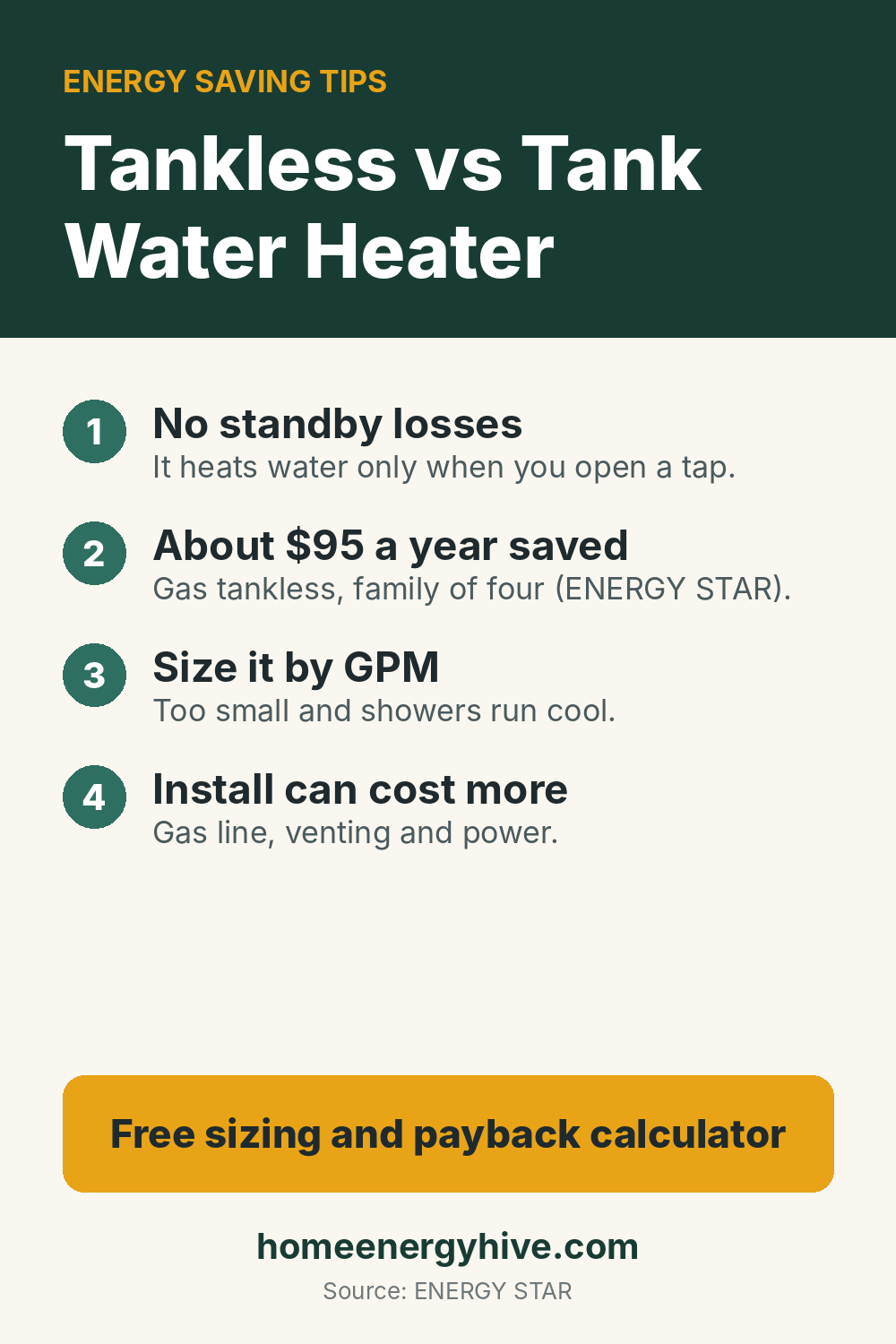
- A tankless heater warms water only when you open a tap, so it avoids the standby losses of a tank.
- ENERGY STAR says a certified gas tankless model saves a family of four about $95 a year against a standard gas tank, and lasts about 20 years.
- Tankless units are sized by gallons per minute (GPM), not gallons of storage. Too small, and two showers at once will run cool.
- Installation can cost more: the gas line, venting and power supply may need changes. Get a written quote before you decide.
Tankless vs tank water heater is a common question when an old heater starts to fail. A tank keeps 40 or 50 gallons hot all day; a tankless unit heats water as it flows. Each has a place. This guide uses ENERGY STAR data to compare running costs, lifespan and space, explains how to size a tankless unit, and gives you a calculator for flow and payback.
How Each Type Works
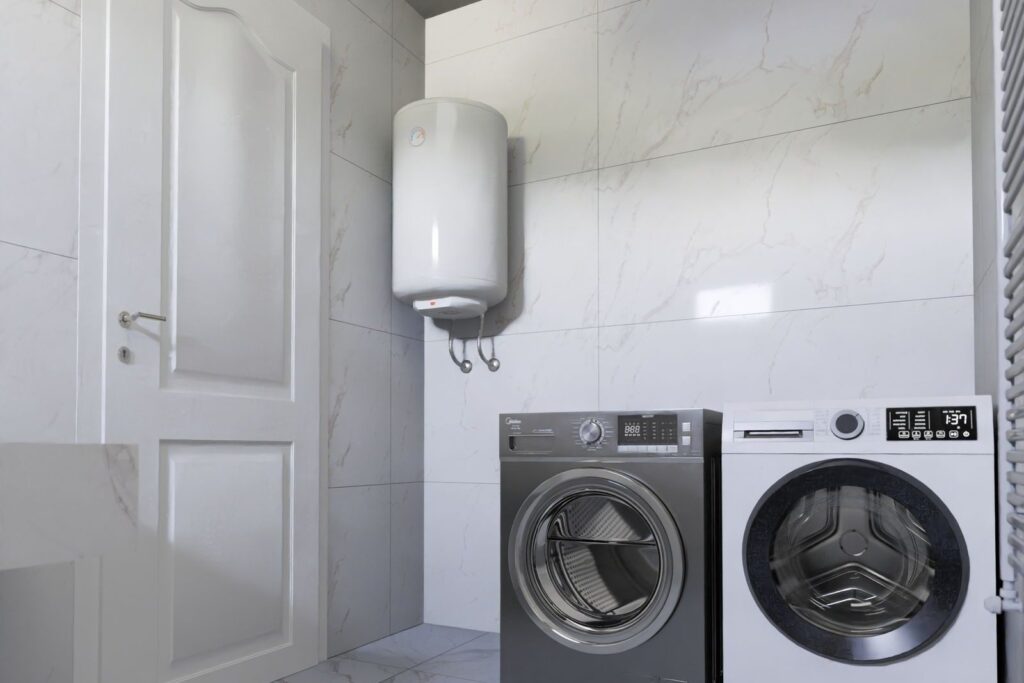
A storage (tank) water heater keeps a tank of water hot at all times. Even when nobody uses hot water, some heat escapes through the tank walls, so the burner or element switches on now and then to make up for it. These are called standby losses.
A tankless water heater has no tank. ENERGY STAR explains that when you open a hot tap, a flow sensor turns on the gas burner, and the water is heated as it passes the heat exchanger. Because nothing is kept hot between uses, there are no standby losses. Certified gas tankless models also use a second heat exchanger to take extra heat from the exhaust, so they use 9% less energy than conventional tankless models.
Tankless vs Tank Water Heater: Side by Side
| Gas tankless (ENERGY STAR) | Gas tank | |
|---|---|---|
| Hot water supply | Continuous, up to its GPM rating | Limited by tank size and first-hour rating |
| Running cost | About $95 a year less for a family of four than a standard gas tank | Certified tanks use about 10% less energy than standard ones |
| Life expectancy | About 20 years | Shorter; risk of tank leaks |
| Space | Small, wall-mounted; some outdoor models | Needs floor space |
| Installation | May need a bigger gas line, new venting and power | Often a like-for-like swap |
Figures from ENERGY STAR’s tankless benefits page and gas water heater fact sheet. Your savings depend on how much hot water you use and your gas price.
How to Size a Tankless Water Heater
A tank is sized in gallons. A tankless unit is sized by how many gallons of hot water it can produce per minute. ENERGY STAR gives these average flows:
- Shower or bathtub: 2.5 GPM
- Clothes washer: 3.3 GPM
- Kitchen or bathroom sink: 2.2 GPM
- Dishwasher: 1.3 GPM
Add up what might run at the same time. Two showers and a sink, for example, need about 7.2 GPM. ENERGY STAR advises having an experienced plumber estimate your demand. The output a unit can deliver also falls when the incoming water is colder, so ask the installer to size for your winter water temperature.
Flow figures are ENERGY STAR averages; your fixtures may use less. Payback = extra cost ÷ yearly savings. Example values only.
Installation: Where the Extra Cost Comes From
ENERGY STAR notes that tankless units may take longer to install and that you will need an in-home estimate. The installer should check that your gas line is big enough, whether there is electricity near the heater for models with forced venting, and how the combustion gases will be vented. Condensing models, like condensing furnaces, need a PVC vent and a condensate drain.
When you collect quotes, ENERGY STAR suggests asking for written estimates and references, checking the company with the Better Business Bureau, and confirming that the installer will get any local permit. Utilities often offer rebates; the 2018 fact sheet lists several of a few hundred dollars.
When a Tank (or a Heat Pump Tank) Makes More Sense
- Your current tank size works. ENERGY STAR says that if your existing heater meets your needs most of the time, a same-size replacement is usually fine. Compare the first-hour rating on the yellow EnergyGuide label.
- The gas line or venting would need major work. The higher installation cost can wipe out the yearly savings.
- You heat water with electricity. A heat pump water heater may save more. ENERGY STAR says it needs a space that stays between 40°F and 90°F all year, with about 1,000 cubic feet of air around it. Our guide to heat pump water heater cost has the numbers.
Plan Before Your Old Heater Fails
ENERGY STAR’s first tip is to plan ahead. If you wait for a leak, you will likely take whatever tank the plumber has on the truck. If your tank is getting old, get quotes for both types now, check rebates, and decide calmly.
- Savings, lifespan, flow figures and buying tips from ENERGY STAR’s water heater pages and its 2018 gas water heater fact sheet
- Heat pump water heater placement rules from ENERGY STAR
- The flow and payback calculator is our own simple math
No company pays to appear here, and we have not tested products in person.
Frequently Asked Questions
Is tankless cheaper than a tank water heater?
It usually costs less to run. ENERGY STAR estimates a certified gas tankless model saves a family of four about $95 a year against a standard gas tank. It often costs more to buy and install, so check the payback with your own quotes.
How long do tankless water heaters last?
ENERGY STAR gives a life expectancy of about 20 years, longer than conventional tank models.
What size tankless water heater do I need?
Add up the flows you might use at once: about 2.5 GPM per shower, 2.2 per sink, 3.3 for a clothes washer and 1.3 for a dishwasher (ENERGY STAR averages). Have a plumber confirm it for your winter water temperature.
Do tankless water heaters run out of hot water?
They do not run out like a tank, but they can only heat so many gallons per minute. If you open more taps than the unit can handle, the water will be cooler.
Our Verdict
In the tankless vs tank water heater choice, tankless wins on running cost, lifespan and space: ENERGY STAR estimates about $95 a year in savings for a family of four and a 20-year life. A tank wins on simple, cheaper installation, and an electric home may do better with a heat pump water heater. Size a tankless unit by gallons per minute, get written quotes for both, and use the calculator to see if the extra cost pays back within the unit’s life.
Keep reading
- Heat Pump Water Heater Cost: the electric alternative
- Are ENERGY STAR Appliances Worth It?: payback for other appliances
- Heat Pump vs Furnace: compare heating costs too
Save this guide on Pinterest