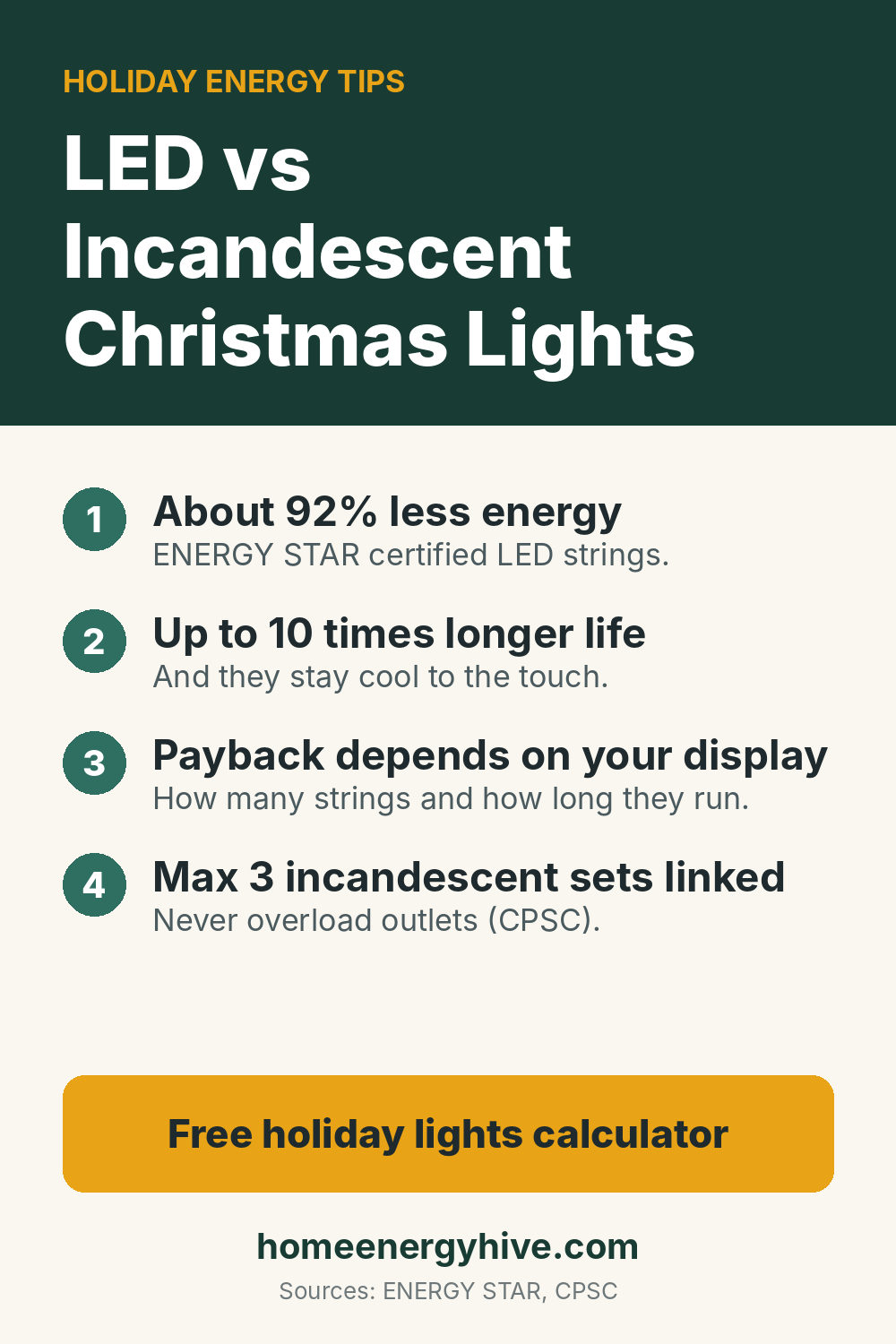
- ENERGY STAR certified LED light strings use about 92% less energy than conventional incandescent strings, and can last up to 10 times longer.
- Certified LED strings may use no more than 0.2 watts per bulb and come with at least a 3-year warranty.
- Whether switching pays off depends on how many strings you run and for how long. Use the calculator below with the watts on your boxes.
- The CPSC says never to connect more than three sets of incandescent lights together, and never to overload outlets.
LED Christmas lights vs incandescent is a classic holiday question: are the new strings worth buying, or should you keep the old ones until they burn out? The answer depends on your display. This guide uses ENERGY STAR data to show the real difference, lets you compare your own strings, and covers the safety rules that matter more than the bill.
LED Christmas Lights vs Incandescent at a Glance
| ENERGY STAR LED strings | Incandescent strings | |
|---|---|---|
| Energy use | About 92% less | Baseline |
| Power per bulb | 0.2 W or less (certification limit) | Check the box; large C7 and C9 bulbs use several watts each |
| Lifetime | Up to 10 times longer | Shorter; filaments and glass can break |
| Heat | Cool to the touch | Bulbs get warm |
| Warranty | At least 3 years (certified) | Varies |
The LED figures come from ENERGY STAR’s decorative light strings page. ENERGY STAR gives a striking example: the electricity used by just one 7-watt incandescent bulb could power 140 LEDs, enough for two 24-foot strings.
Why LEDs Use So Much Less Power
An incandescent bulb makes light by heating a thin filament until it glows, so much of its power turns into heat. An LED, or light emitting diode, makes light by moving electrons through a semiconductor. ENERGY STAR notes that LEDs are especially efficient at producing single colors, which suits holiday lights.
LED strings also have no filaments or glass, so they are more durable and shock-resistant. As a result, fewer strings fail halfway through the season.
Compare Your Own Strings
The power use is printed on the box or the tag near the plug, usually as watts per string. Enter your numbers below. If you only know the bulb count, multiply it by the watts per bulb.
Example values only. Electricity cost = watts × hours × nights × price. The U.S. residential average was 18.16¢ per kWh in August 2026 (EIA); use the price from your own bill.
When Switching Pays Off, and When It Doesn’t
The 92% figure is impressive, but the dollars depend on your display:
- Big outdoor displays with large bulbs: old C7 or C9 incandescent bulbs use several watts each, and these displays often run for hours every night. Here LEDs can pay back quickly.
- A few strings of small mini lights: the savings are real but small, often a few dollars a season. Buying new strings only for the bill may take years to pay off.
- Strings that are failing anyway: replace them with ENERGY STAR LED strings. You save energy and get the 3-year warranty.
In short, run the calculator with your own boxes before you buy. Keeping working lights also avoids waste.
Holiday Light Safety Comes First
The lights on your house matter more for safety than for your bill. The U.S. Consumer Product Safety Commission reported about 14,900 emergency room visits for holiday decorating injuries in the 2023 holiday season, and notes that nearly half of decorating injuries involve falls. Its advice on lights is simple: never string together more than three sets of incandescent lights, and never overload electrical outlets.
- Use a sturdy ladder and have someone hold it when you hang lights on the roof line.
- Check old strings before you hang them: throw away sets with cracked sockets, frayed wires or loose connections.
- Use strings and extension cords labeled for outdoor use outside. ENERGY STAR notes that certified strings labeled for outdoor use pass weathering tests.
- Turn lights off when you go to bed or leave home.
LEDs help here too: ENERGY STAR points out that LED strings stay cool to the touch, which lowers the fire risk.
Easy Ways to Cut the Cost Further
- Use a timer. A plug-in timer turns the display off at a set hour, so the lights do not run all night by mistake. Our guide to smart power strips and timers compares the options.
- Count the nights. Starting the display a week later or ending it earlier cuts the total directly.
- Mix old and new wisely. Replace the biggest, longest-running strings first; they give the largest savings.
- LED energy use, lifetime, warranty and per-bulb limit from ENERGY STAR’s decorative light strings page
- Injury figures and the three-set rule from the CPSC’s holiday safety release (November 2024)
- Electricity price from the EIA’s Electric Power Monthly
- The calculator is our own: watts × hours × nights × price
No company pays to appear here, and we have not tested products in person.
Frequently Asked Questions
Do LED Christmas lights really save money?
Yes, they use about 92% less energy than incandescent strings, according to ENERGY STAR. The dollar savings depend on how many strings you run, their watts, the hours and your electricity price.
How many incandescent light strings can I connect together?
The CPSC says never to string together more than three sets of incandescent lights. For LED strings, follow the maximum printed on the box or tag.
Do LED Christmas lights last longer?
ENERGY STAR says certified LED strings can last up to 10 times longer than traditional incandescent strands, and they come with at least a 3-year warranty.
Are LED Christmas lights safer?
They stay cool to the touch, which lowers the fire risk, and have no glass or filaments to break. You still need to inspect cords, avoid overloading outlets and turn lights off when you sleep or go out.
Our Verdict
In the LED Christmas lights vs incandescent debate, LEDs win on energy, lifetime and safety. ENERGY STAR certified strings use about 92% less energy and stay cool. Still, replacing working mini lights only to cut the bill may take years to pay off. Use the calculator with your own boxes, replace the biggest and oldest strings first, and put the whole display on a timer.
Keep reading
- LED vs Incandescent Bulbs: the same comparison for everyday bulbs
- Smart Power Strip vs Regular: timers and switching things off
- Energy Saving Myths: what really saves and what does not
Save this guide on Pinterest