- A home energy monitor shows where your electricity goes, in real time.
- Our top pick is the Emporia Vue 3, which measures up to 16 circuits for about $100–$200.
- Sense, long the main rival, stopped selling its monitor on December 31, 2025. If you already own one, it keeps working.
- A monitor only saves money if you act on what it shows. Studies of energy feedback point to savings of around 5%.
A home energy monitor is like a fuel gauge for your house. Instead of one number on your monthly bill, you see which circuits and appliances use power, and when. That’s how people find the old freezer, the forgotten heater or the pool pump that runs too long.
But a monitor costs money and goes inside your electrical panel. So is it worth it? Use the calculator to see if one would pay for itself, then compare the best options for 2026.
Will a Home Energy Monitor Pay for Itself?
A monitor saves nothing by itself: the saving only comes from what you switch off, repair or replace after seeing the data. 3% is a cautious figure and 10% is the best case some makers advertise.
Best Home Energy Monitors of 2026 Compared
| Option | Typical price | How it measures | Best for |
|---|---|---|---|
| Emporia Vue 3 | About $100–$200 | Clamps on up to 16 individual circuits | Most homes: exact numbers per circuit |
| Sense (no longer sold) | Sales ended Dec 31, 2025 | Watches the main lines and learns device “signatures” | Only if you already own one: it’s still supported |
| Smart meter with Sense built in | Free, if your utility offers it | Reads your home’s power at the meter | Customers of utilities that have rolled it out |
| Smart plugs with monitoring | About $15–$25 each | One plug-in device at a time | Renters, or checking a few devices |
| Your utility’s smart meter data | Free | Whole home, often by hour | Everyone: check this first |
Before buying anything, log in to your utility account. Many U.S. utilities already show your hourly use from the smart meter. It won’t tell you which appliance is to blame, but it’s free and shows when your use spikes.
Our Picks
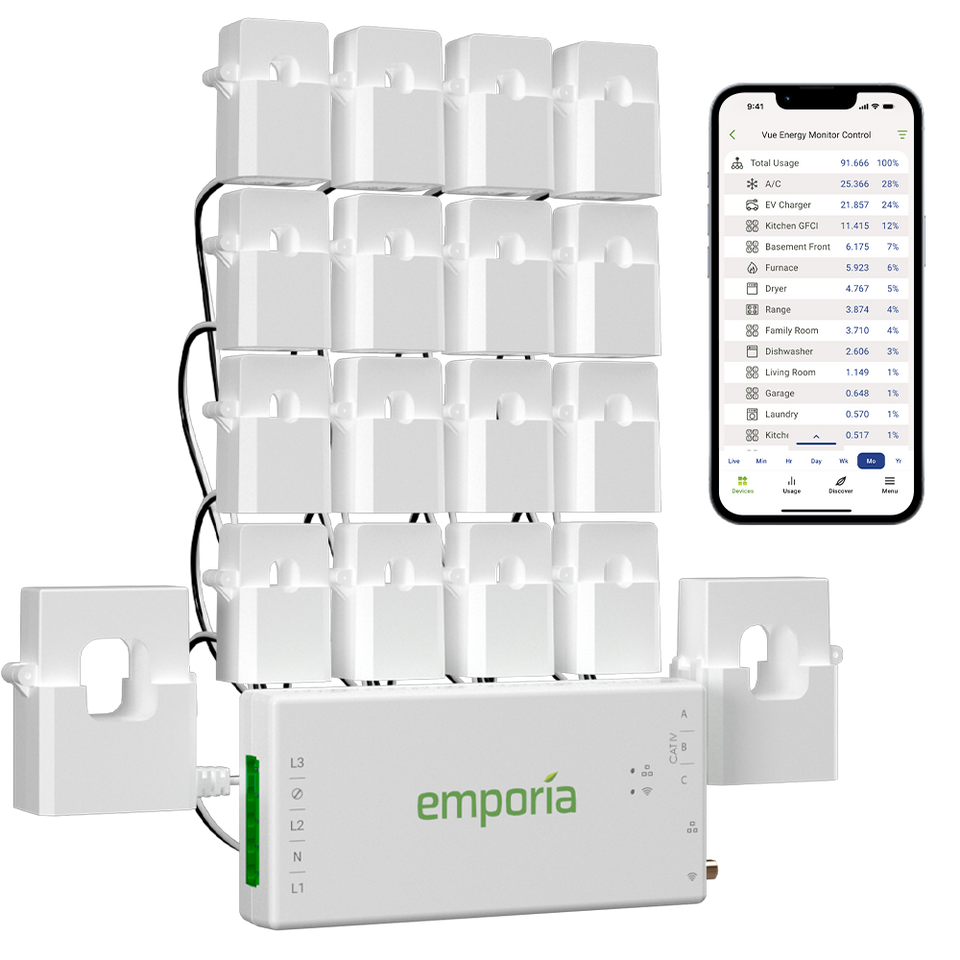
Emporia Vue 3
The Vue 3 clamps sensors onto individual breakers, so you see exactly what each circuit uses. That makes it easy to spot a single problem, like a freezer or a water heater running too much. It also works with time-of-use rates and solar.
- Exact numbers per circuit
- Lowest price for what it does
- Real-time app with alerts
- Installs inside your electrical panel
- More clamps means more wiring work
Sense Energy Monitor (no longer sold)
Sense stopped selling its monitor by December 31, 2025. The company now puts its software inside utility smart meters instead. It says existing monitors keep getting app updates, firmware updates and support.
So if you have one, keep using it. If you’re shopping now, it’s not an option, unless your utility offers a smart meter with Sense built in. Sense’s own help page points people who need a replacement to Emporia.
Smart plugs with energy monitoring
If you can’t open the electrical panel, use smart plugs. Move one from device to device for a week each. It’s slower, but it costs little and needs no electrician.
Watch: Emporia Vue 3 Install and Review
An independent YouTuber installs a Vue 3 and shows the app. Watch it to see what the job involves, but remember: if you’re not trained for panel work, hire an electrician.
Video: Emporia Vue Gen 3 – Install and Review on YouTube.
- How each option measures: per circuit, whole home or one device
- Price on the maker’s site (checked in October 2026) and whether it’s still sold
- Install work and safety (panel access)
- App features such as alerts, solar and time-of-use support
We haven’t tested these products in person. No brand paid to be included.
What Real Owners Say
Here is what owners report after living with a monitor. We summarized their experiences in our own words. They are individual experiences, not tests.
A writer at Green Building Advisor installed an Emporia Vue at home. The author says it gave a much clearer picture of where the electricity went and helped find ways to cut use and costs. The article also notes that installation isn’t always simple, especially in a crowded electrical panel.
Source: Green Building AdvisorA Pocketables writer who used a Sense monitor from 2017 until the company stopped selling it says it tracked down strange energy use from a faulty water heater. It also revealed a large constant load caused by bad wiring.
Source: PocketablesBoth stories point to the same truth: the biggest wins come from finding one forgotten device that runs all the time. Research backs this up. A report by the American Council for an Energy-Efficient Economy found that people using energy monitors cut their use by around 5%.
When an Energy Monitor Isn’t Worth It
- Your bill is already low. On a $60 bill, even 10% savings takes years to cover the cost.
- You won’t check the app. The monitor shows problems; it doesn’t fix them.
- You rent. You usually can’t open the panel. Use smart plugs instead.
- Your utility already shows hourly data and that’s enough for you.
Safety First: Installing in the Electrical Panel
Panel-mounted monitors like the Emporia Vue connect inside your breaker box, near live parts. Even with the main breaker off, some parts stay live. If you are not trained for electrical work, hire a licensed electrician. It usually takes them under an hour.
Frequently Asked Questions
Are home energy monitors worth it?
They can be, if you act on what they show. Research on energy feedback suggests savings of around 5%. The biggest wins come from finding one device that wastes a lot.
Can I still buy a Sense monitor?
Not new. Sense stopped selling its monitor at the end of 2025. If you already own one, it is still supported. For a new purchase, the Emporia Vue 3 is the closest common alternative.
Can I install an energy monitor myself?
Only if you’re qualified for electrical work. It goes inside your breaker panel. Otherwise, hire an electrician.
What’s the cheapest way to monitor energy use?
Check your utility’s smart meter data for free, then use a smart plug with energy monitoring to test single devices.
Our Verdict
For most homeowners, the Emporia Vue 3 is the home energy monitor we’d buy. It’s affordable and shows exactly which circuits use the most. Sense is no longer sold, so it isn’t an option for new buyers. If you already have one, keep using it.
Start free with your utility’s data. If you rent, use smart plugs. And remember: the monitor finds the waste, but you still have to switch it off.
Keep reading
- Why Is My Electric Bill So High? Find the Cause With a Bill Detective and a DIY Energy Audit: find why your bill went up.
- Smart Power Strip vs Regular Strips: Are They Worth It?: cut standby power the right way.
- Average Electric Bill in the U.S.: 2024 Data for Every State, and How to Compare Yours: compare your bill with your state.
- How Much Electricity Does a TV Use? Watts, Yearly Cost and Easy Savings: what your TV costs per year.
Save this guide on Pinterest