- Size by watt-hours (Wh) for how long things run, and by watts (W) for what you can plug in at once.
- A 1,000 Wh unit keeps a fridge going for roughly half a day, or a 35–55 W CPAP for roughly 13–25 hours, depending on the humidifier and the outlet you use (measure yours and keep a margin). About $400–$700 on sale.
- For well pumps or 240 V circuits, you need a big expandable unit such as the EcoFlow DELTA Pro 3 (about $2,600–$2,800).
- EcoFlow charges fastest and expands most; Jackery is simplest and light; Anker is often the best value.
The best portable power stations are no longer just for camping. A one-hour outage is an annoyance; a multi-day outage makes a power station a real household tool for keeping a fridge cold, running medical equipment and charging phones. Unlike a home battery, it needs no installer: buy it, charge it, and it’s ready. This guide shows how to size one, compares the main models, and settles EcoFlow vs Jackery.
How Long Will It Run? Calculator
Pick your power station and what you want to keep running. It’s an estimate: fridges cycle on and off, and cold or heat changes battery output.
We assume about 85% of the rated capacity reaches your devices after inverter losses. A fridge also needs a startup surge, so check the unit’s surge rating. For a CPAP or any medical device, treat this as an estimate only: measure the real draw at your settings and keep a margin.
The Best Portable Power Stations Compared
| Model | Capacity | Output | Typical 2026 price | Best for |
|---|---|---|---|---|
| EcoFlow DELTA Pro 3 | 4,096 Wh (expandable) | 4,000 W, 120/240 V | About $2,600–$2,800 | Whole-home backup, well pumps, 240 V circuits |
| EcoFlow DELTA 3 Plus | 1,024 Wh (expandable) | 1,800 W | About $650–$700 | Fast charging and room to grow |
| Anker SOLIX C1000 Gen 2 | 1,024 Wh | 2,000 W | Often $430–$530 (list $799) | Best value for most people |
| Jackery Explorer 1000 v2 | 1,070 Wh | 1,500 W | Often $430–$500 (list $799) | Simplicity and lighter weight |
| Small ~300 Wh units | About 290–300 Wh | About 300 W | About $190–$250 | Phones, laptops; a CPAP for about 4–7 hours |
All of these use LFP (lithium iron phosphate) batteries, which last thousands of cycles. Prices move a lot with sales; compare in the same week. Specs come from the makers.
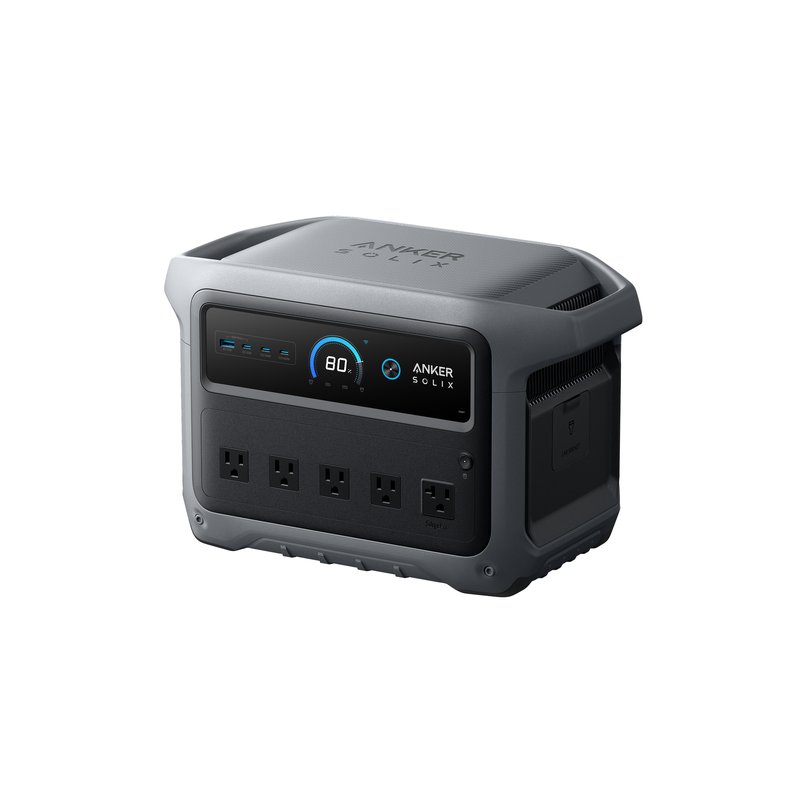
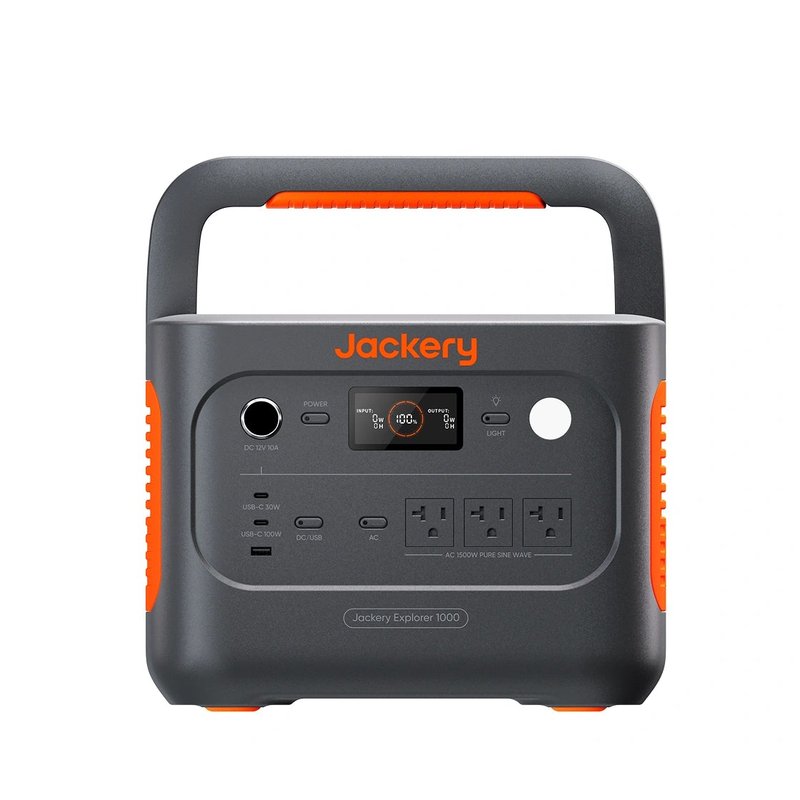
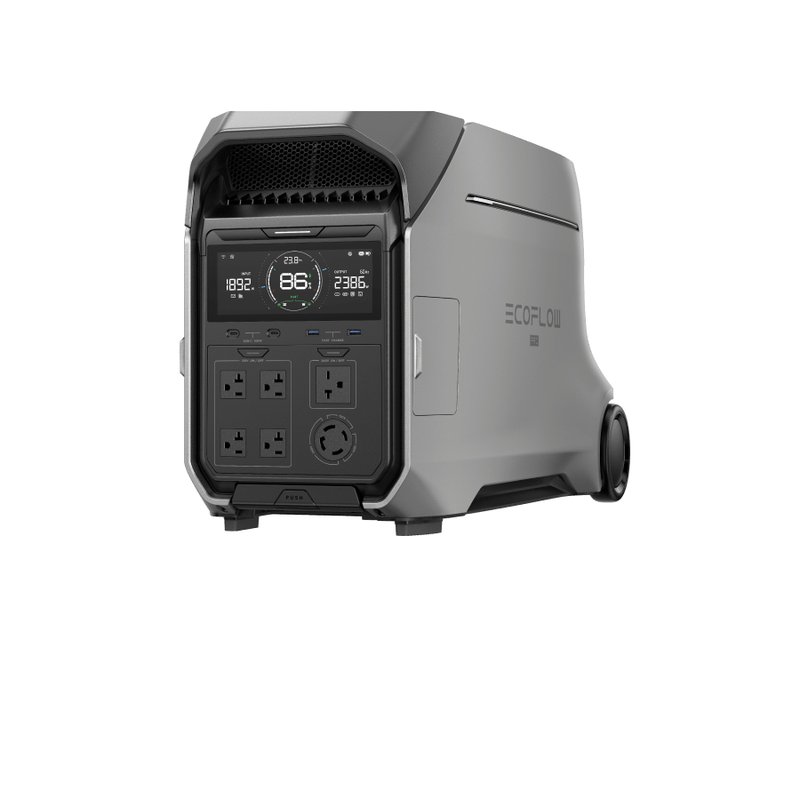
Product photos from each maker. We have not tested these units in person.
EcoFlow vs Jackery (and Anker)
- Charging speed: EcoFlow’s DELTA units and Anker’s C1000 Gen 2 (49 minutes in fast mode, set in the app) recharge from the wall in about an hour or less. Jackery’s 1000 v2 takes about an hour in fast mode and about two in standard mode.
- Output: EcoFlow DELTA 3 Plus 1,800 W, Jackery 1000 v2 1,500 W, Anker C1000 Gen 2 2,000 W. More output runs a microwave, space heater or power tool; capacity decides how long.
- Expansion: EcoFlow has the biggest ecosystem, up to whole-home kits. Jackery’s larger models also expand.
- Apps: EcoFlow’s app is widely praised; Anker’s has improved; reviews of Jackery’s are mixed.
- Warranty: about 5 years for EcoFlow DELTA 3 Plus and Anker C1000; Jackery lists 3 years, or 5 if you register.
- Weight: Jackery is usually lightest (about 24 lb for the 1000 v2).
Short answer: choose EcoFlow for fast charging, high output and expansion; Jackery for a simple, lighter unit; Anker when you want fast charging at a lower price.
Safety and Setup
- Use it indoors safely: unlike gas generators, power stations make no fumes, so they’re safe inside.
- Never back-feed your house through an outlet. To power home circuits, use the maker’s transfer kit or panel, installed by an electrician.
- Keep it charged before storm season, and top it up every few months.
- For medical devices, check the device’s wattage and talk to your provider; a DC cable for a CPAP often runs longer than the AC outlet.
What Real Owners Say
These are individual experiences, summarized in our own words.
During a four-day outage in 2026, an owner found that a roughly 1,150 Wh power station ran a full-size fridge-freezer for about 8 hours before it was empty. Knowing the outage would last days, he rationed it and also ran a cord to the gas water heater.
Source: Rivian ForumsA CPAP user said his small power station ran the machine for about 5 hours with the humidifier on, since it drew around 50 watts, matching the unit’s roughly 250 Wh capacity. Turning the humidifier off stretches the run time a lot.
Source: CPAPtalk forum- Capacity, output and warranty from the makers’ spec sheets
- Typical U.S. prices seen in 2026 sales and list prices
- Run times calculated from typical appliance draws
- Owner experiences from forums, with links
We haven’t tested these products in person. No brand paid to be included.
When a Portable Power Station Isn’t Enough
- You need central AC or electric heat during long outages: look at a home battery with solar, or a standby generator.
- Outages last many days without sun to recharge.
- You want automatic backup without plugging anything in: a home battery (see our home battery guide) does that.
Frequently Asked Questions
What size power station do I need for a fridge?
At least about 1,000 Wh for half a day, and 2,000 Wh or more for a full day, with output of 1,000 W or more to handle the startup surge.
Is EcoFlow or Jackery better?
EcoFlow wins on charging speed, output and expansion; Jackery on simplicity and weight. Anker is often the best value at around 1,000 Wh.
Can a power station run a CPAP all night?
Not always. By our calculator’s numbers, a 300 Wh unit runs a 35 W CPAP for about 7 hours and a 55 W CPAP (with humidifier) for only about 4.5 hours, and less through the AC outlet because the inverter uses power too, so it may not last a full night. A 1,000 Wh unit gives roughly 13–25 hours, depending on the humidifier and the outlet you use. Check your machine’s real wattage at your settings, leave a safety margin, and ask your provider for a backup plan. Don’t rely on one battery for a medical device.
Can I use a power station indoors?
Yes. They don’t produce exhaust, unlike gas generators.
Can I charge it with solar panels?
Yes. Most accept portable panels, which can recharge them during the day in a long outage.
Our Verdict
For most homes, a 1,000 Wh unit such as the Anker SOLIX C1000 Gen 2 or Jackery Explorer 1000 v2 is the best portable power station for the money: enough for a fridge for hours, a CPAP for a night or two and all your phones. If you need a well pump or 240 V circuits, the EcoFlow DELTA Pro 3 is the step up. Use the calculator, then buy on sale.
Keep reading
- Best Home Battery Backup in 2026: Powerwall 3 vs Enphase vs FranklinWH: whole-home battery backup compared.
- Plug-In Solar Panels and Balcony Solar: What Is Legal, What It Costs, What You Save: what plug-in solar costs and where it is legal.
- How Many Solar Panels Do I Need? Formula, Calculator and Examples: size a solar system for your home.
- How Many Watts Does a Refrigerator Use? kWh, Cost and Savings: what your fridge uses and costs.
Save this guide on Pinterest